ISSUE 024
Food Fraud ESL Lesson
Can you trust what's on your plate?
A ready-to-teach ESL lesson exploring food fraud, fake labels, ingredient substitution, food safety and consumer trust, with reading, listening, vocabulary, discussion and critical-thinking activities for B1–B2 English learners.
Collection 04 includes Issues 021–025.
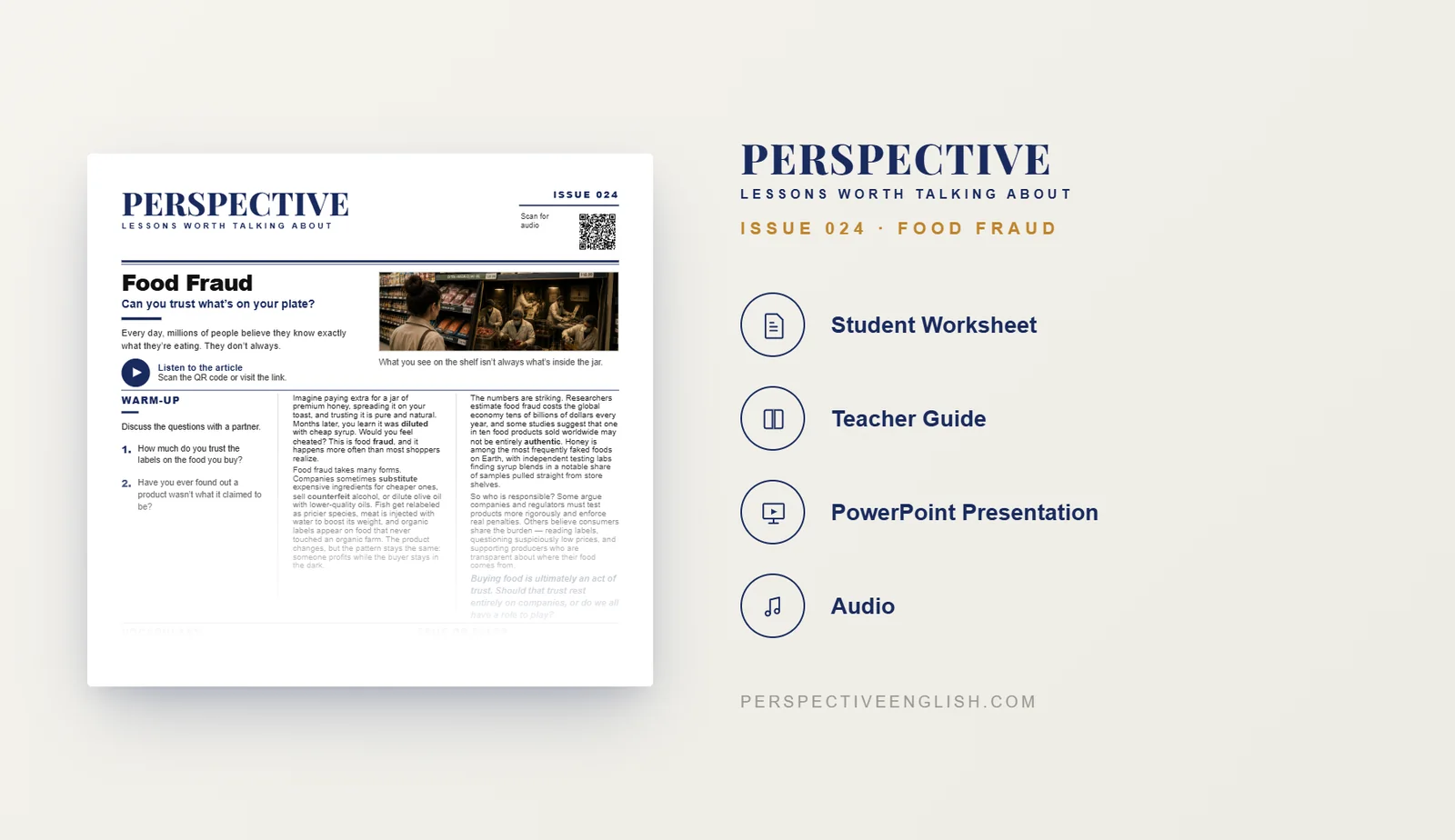
LESSON PREVIEW
ABOUT THIS LESSON
About This Food Fraud ESL Lesson
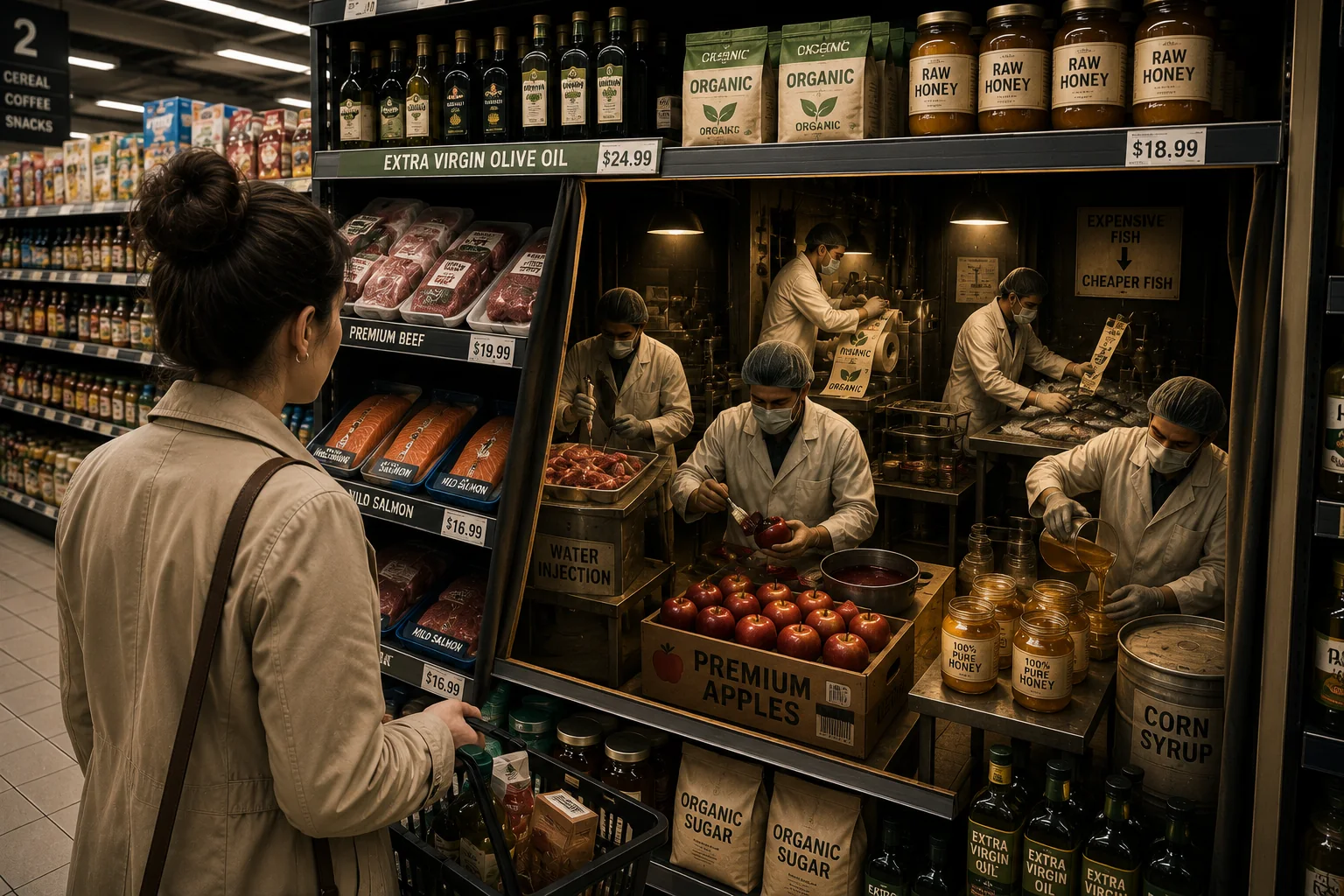
Consumers usually trust that the food they buy is exactly what the label claims. However, some products are diluted, substituted, relabeled or falsely advertised to increase profits.
This B1–B2 Food Fraud ESL lesson explores examples including honey mixed with syrup, cheaper fish sold as premium species, diluted olive oil, fake organic labels, counterfeit alcohol and water injected into meat. Students consider why food fraud happens and why it can be difficult for consumers to detect.
The lesson combines an original reading and audio with vocabulary, comprehension, discussion questions and critical-thinking activities. Students use English to discuss consumer trust, food safety, company responsibility, regulation, labeling and how people can make more informed choices.
FROM THE ARTICLE
WHAT'S INCLUDED
What's Included in the Food Fraud Lesson?
- Magazine-style B1–B2 ESL student worksheet
- Original food fraud reading and audio recording
- Vocabulary and reading comprehension activities
- Food safety and consumer trust discussion questions and critical-thinking tasks
- Speaking challenge and writing prompt
- Teacher guide and complete answer key
- Ready-to-use classroom presentation
GET THE COMPLETE LESSON
Ready to Teach Food Fraud?
Get the complete Food Fraud ESL lesson individually or save with Perspective Collection 04.
Secure checkout and instant digital delivery through Payhip.