ISSUE 048
Dynamic Pricing ESL Lesson
Why should two people pay different prices for exactly the same thing?
A ready-to-teach B1–B2 ESL lesson exploring dynamic pricing, surge pricing, algorithms and the uncomfortable question of whether businesses should be able to charge different customers different prices for the same thing.
Also available in Collection 09, featuring Issues 046–050.
LESSON PREVIEW
ABOUT THIS LESSON
About This Dynamic Pricing ESL Lesson
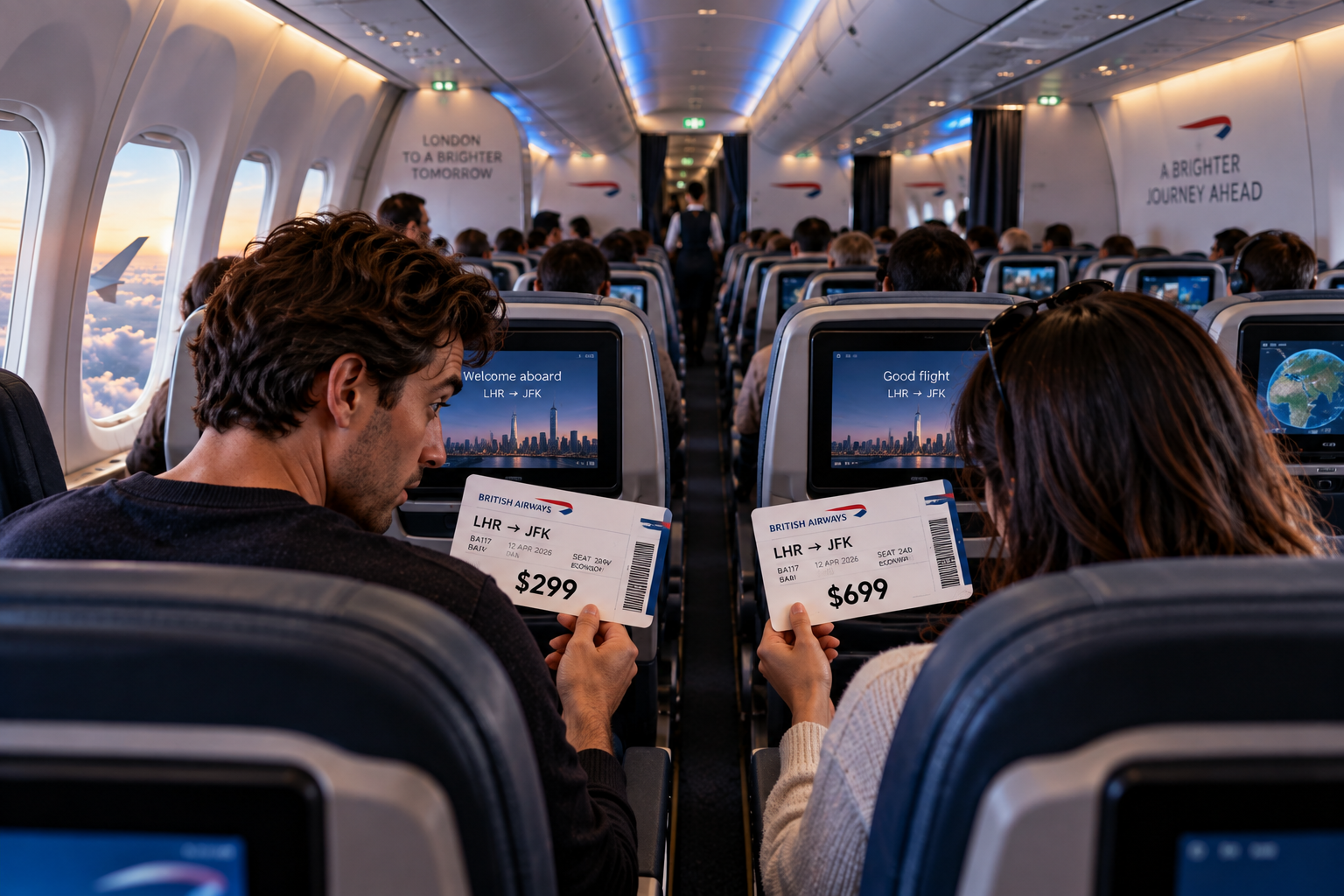
Two passengers can board the same flight, sit only a few rows apart and arrive at exactly the same time, yet one may have paid hundreds of dollars more than the other. This B1–B2 ESL lesson explores dynamic pricing and asks a deceptively simple question: what is something actually worth?
Students examine how airlines, hotels, ride-hailing apps, concert promoters and other businesses change prices according to timing, demand and availability. The article considers the economic argument for flexible prices while also exploring the less comfortable role of algorithms and the possibility of businesses estimating how much an individual customer is willing to pay.
Students then connect the topic to their own experiences through discussion, run a music festival in the You Set the Price critical-thinking task, and defend their pricing decisions against an angry customer and journalist before writing their own response to the lesson's central question.
FROM THE ARTICLE
WHAT'S INCLUDED
What's Included in This Same Same, But Different ESL Lesson?
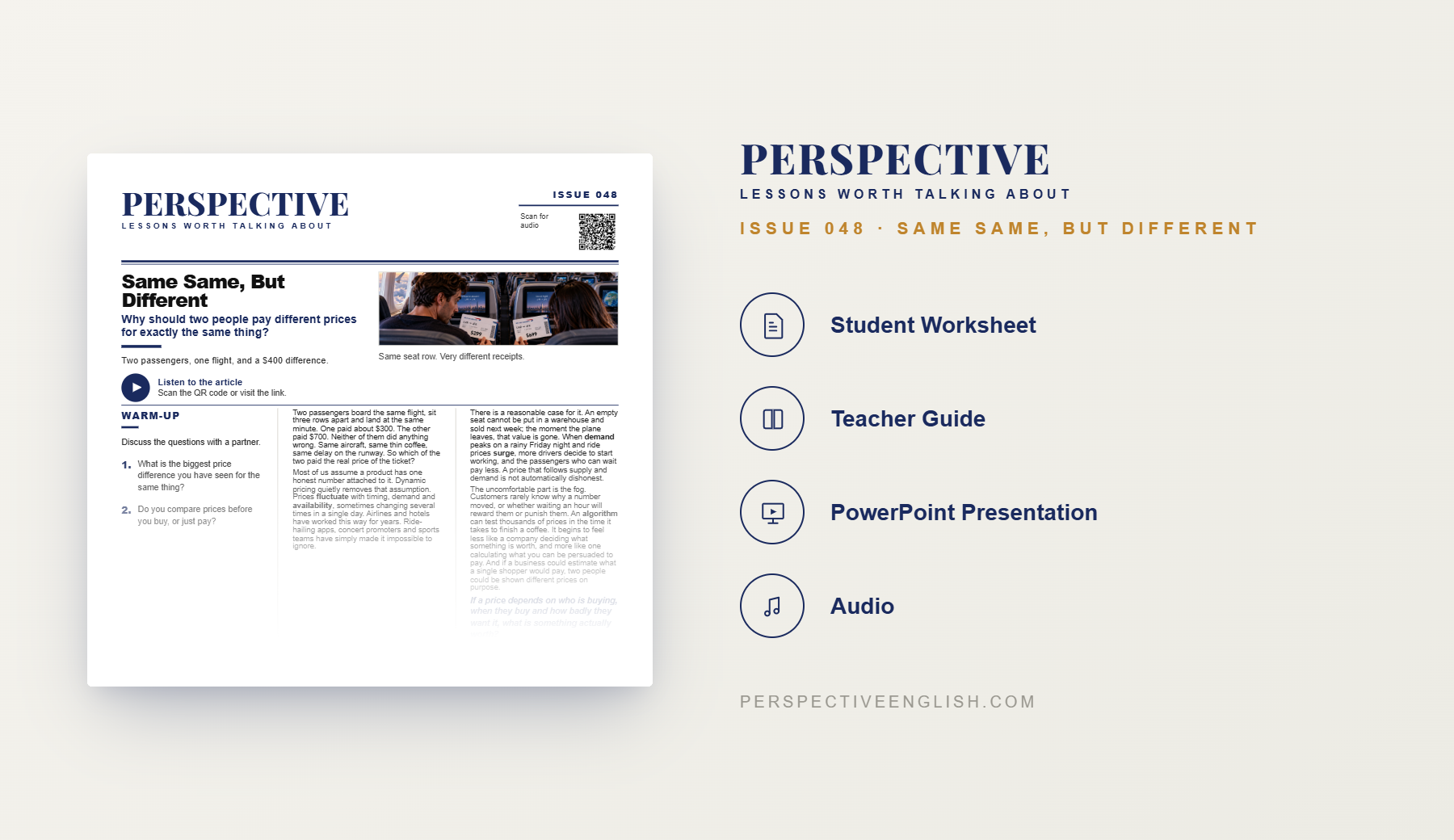
- Magazine-style B1–B2 ESL student worksheet
- Original reading and audio about dynamic pricing
- Vocabulary matching and true-or-false comprehension activities
- Discussion questions about changing prices, fairness and consumer behavior
- You Set the Price critical-thinking task where students design a pricing system for a music festival
- Language-in-context vocabulary activity
- Radio-interview speaking challenge where students defend their pricing decisions against criticism
- 150–200 word opinion-writing task: Why should two people pay different prices for exactly the same thing?
- Teacher guide and complete answer key
- Ready-to-use classroom presentation
GET THE COMPLETE LESSON
Ready to Teach Same Same, But Different?
Get the complete Same Same, But Different ESL lesson individually, or get Issues 046–050 together in Collection 09.
Secure checkout and instant digital delivery through Payhip.